My Day with New York City Emergency Medical Services (EMS)
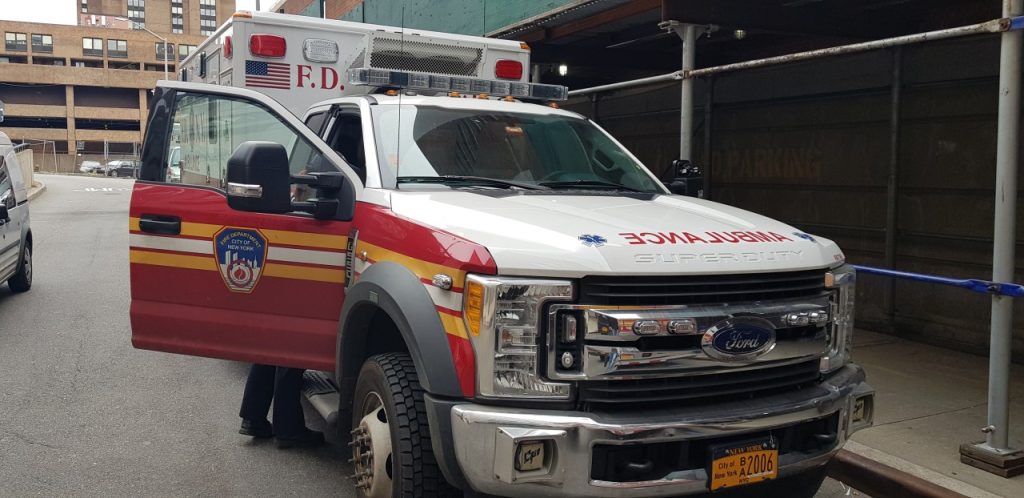
Today, I had the honor of joining a New York City Emergency Medical BLS (Basic Life Support) Unit during their day shift in downtown Manhattan. My trip to the United States was primarily for customer meetings, but before returning to Germany, I seized the opportunity for this insightful observation.
I rode with two Emergency Medical Technicians (EMTs) from New York’s first EMS station at Bellevue Hospital, experiencing firsthand the challenges and operations of the city’s pre-hospital emergency care system.
As I sit in EMS Unit 1397 at NYU Langone Health, awaiting the next call after delivering a patient, I reflect on the professionalism and dedication of the team I joined. As someone still active in emergency medicine in Germany, I was eager to compare their handling of medical emergencies, their workflow, and the equipment and technologies they use.
Key Differences Between U.S. and German EMS
1. Mobile EMS Units
Unlike in Germany, where ambulances return to base between calls, EMS units in New York are assigned to specific areas (approximately four blocks). Their vehicles serve as their workspace and temporary home for 8, 12, or 16 hours, depending on the shift schedule.
2. Siren Fatigue
Traffic congestion in New York significantly impacts EMS response times. Even with lights and sirens, many drivers fail to yield, likely due to what I interpret as siren fatigue. For one emergency transport, we covered just 5 kilometers in 18 minutes, a delay that could be critical in life-threatening situations.
3. Minimal Equipment on BLS Ambulances
BLS ambulances in the U.S. carry less equipment than standard German ambulances (Rettungswagen, RTW). Notably, they lack ECG monitors, cannot administer IV lines, and do not perform endotracheal intubation. Additionally, ventilators are absent on board. Interestingly, each EMT carries a personal medical bag, individually stocked according to preference and experience.
I didn’t have the chance to work with an ALS (Advanced Life Support) unit, but I learned that they follow a significantly higher equipment standard, allowing paramedics to administer medication, intubate, and ventilate patients.
4. Fully Digital Medical Documentation
Patient records in the U.S. EMS system are completely digital, a feature that impressed me. EMTs can retrieve medical histories and allergy information for previous patients. In one case, this was potentially life-saving, as the patient had an aspirin allergy, a critical consideration in treating Acute Coronary Syndrome (ACS). This type of seamless digital integration is something Germany could greatly benefit from.
5. On-Board Teleconsultation
Unlike in Germany, U.S. EMS systems are not physician-based. Instead, EMTs and paramedics communicate directly with hospital physicians via bi-directional teleconsultation, receiving remote medical guidance when needed.
6. Common Medical Conditions
New York EMS deals with a high number of drug-related and psychiatric emergencies. Gunshot wounds and stabbing injuries, while less common in downtown Manhattan, remain alarmingly frequent, much more than in Germany. Many incidents are tied to domestic violence, highlighting ongoing social challenges.
7. Heavy Police Presence
Police presence in public emergencies is noticeably greater in New York compared to Germany. Even in routine cases, such as a suspected stroke in a subway station, four police officers secured the EMS team while treating the patient.
Due to the perceived higher risk level during EMS operations in New York, the emergency dispatch center proactively checks the safety and operational status at predefined intervals using digital radio communication during missions.
8. Ambulance Interior and Working Space
New York EMS vehicles are spacious, accommodating up to four people plus a stretchered patient. However, the standing height inside the vehicle is significantly lower than in German ambulances (approximately 1.70 meters). This could make trauma patient care more challenging, as the stretcher height is fixed and cannot be adjusted.
9. Training Duration
Becoming an Emergency Medical Technician (EMT) in the U.S. takes approximately three months, whereas Paramedic training requires around nine months. This is shorter than Germany’s training requirements, where EMTs undergo more extensive education.
Final Thoughts
My time with New York EMS was deeply inspiring and insightful. I am grateful to the team for their openness and willingness to answer countless questions. If you are a paramedic or physician, I highly recommend reaching out to U.S. EMS teams—it’s a fascinating experience!
Furthermore, for my colleagues in the MedTech industry, observing EMS operations firsthand is invaluable. As I firmly believe, meaningful innovation in clinical technology is far more effective when grounded in real-world practitioner insights.